
Data reveals that the number of voters in Uttar Pradesh, Uttarakhand, Goa, Punjab, and Manipur has decreased by up to 13.24 per cent following the Special Intensive Revision (SIR) of electoral rolls. Across these five states, the electorate shrank by approximately 2.29 crore, a 12.2 per cent reduction, with Uttar Pradesh accounting for nearly 90 per cent of this drop. These states are slated for assembly polls early next year, and the Election Commission is conducting further revisions to include eligible voters.

The Supreme Court is set to hear pleas challenging Chief Election Commissioner Gyanesh Kumar's alleged unilateral decisions without the concurrence of other election commissioners. The petitions seek his suspension and question actions like altering voter registration forms and handling electoral roll revisions in Goa and West Bengal, highlighting concerns over the multi-member character of the Election Commission.

The Election Commission of India has defended its Special Intensive Revision (SIR) of voters' lists, asserting that differing views among Commissioners are a normal part of deliberations and all orders carry full legal sanction, following reports of two Commissioners red-flagging issues.
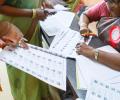
The Election Commission has announced a Special Summary Revision of electoral rolls in 17 states and Union territories, including those facing assembly polls next year. This initiative aims to enrol new voters, correct existing entries, and enhance the accuracy of voter lists, with January 1, 2027, set as the qualifying date.

Five people, including a JCB driver, were arrested in Gorakhpur following the death of a 14-year-old son of a BJP leader. The boy was allegedly crushed by a bulldozer returning from a Samajwadi Party roadshow. A Samajwadi Party leader, Sadhu Yadav, has been named in the FIR and questioned, with police seizing four JCB machines used during the event.

The Election Commission of India has introduced a mandatory declaration for new voters, requiring them to provide parental details from the Special Intensive Revision (SIR) exercise. This move, aimed at streamlining voter mapping, has sparked controversy, with some Election Commissioners deeming it "illegal" and "unauthorised" due to potential negative impacts on young voters.

'Election Commissioners are Constitutional authorities and they are not supposed to go to the Cabinet secretary. They are not supposed to write letters. And if they are aggrieved, they should straight go to the President of India.'
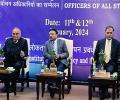
'The Election Commission cannot be regulated by the government.'

'I was just thinking about me, because my rights have been affected. That's it.' 'I am an ordinary citizen of this country, and I am expecting my rights (as a voter) to be restored.'
The Election Commission has launched a special drive to include eligible citizens who were omitted or deleted during the recent Special Investigative Review (SIR) exercise, as well as to register new and young voters. This initiative follows accusations from opposition parties regarding disenfranchisement and aims to ensure no eligible citizen is left out of the electoral process.
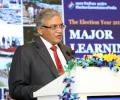
A petition has been filed in the Supreme Court challenging Chief Election Commissioner Gyanesh Kumar over alleged statutory duty violations and the controversial deletion of 13 crore voters during the Special Intensive Revision of electoral rolls, claiming decisions were made without the concurrence of other election commissioners.

The Election Commission of India has addressed reports of internal dissent among its commissioners and clarified that all Special Intensive Revision (SIR) orders and Form 6 updates for voter enrolment received unanimous consent and were upheld by the Supreme Court. The EC also announced measures to ease the process for voters issued notices, including doorstep document collection and extended deadlines in Delhi and Maharashtra, while affirming its commitment to transparent decision-making and meticulous compliance with directives.

The State Bank of India (SBI) on Tuesday evening submitted details of electoral bonds to the Election Commission of India in compliance with the Supreme Court order.

Several political parties in Tamil Nadu, including the ruling TVK and opposition DMK, walked out of an all-party meeting convened by the Election Commission. They demanded the resignation of Chief Election Commissioner Gyanesh Kumar, citing alleged irregularities and a lack of transparency in the previous Special Intensive Revision of electoral rolls, where millions of voters were reportedly removed or flagged. The AIADMK and BJP attended the meeting, with AIADMK also raising concerns about the large number of affected voters.

Opposition leaders from CPI-M and AAP faced detention in Delhi and Chandigarh while protesting against Chief Election Commissioner Gyanesh Kumar over serious allegations of voter-list manipulation and suppression of democratic rights.

The Election Commission has removed an additional declaration related to the Special Intensive Revision (SIR) from the online voter enrolment Form 6 in states where the SIR process is complete. This decision follows internal objections from Election Commissioners Sukhbir Singh Sandhu and Vivek Joshi regarding changes to the form and the process. The EC maintains the declaration was SIR-specific and not an amendment to Form 6 itself.
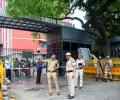
The Election Commission has informed the Supreme Court that over 37 lakh appeals concerning deletions or inclusions in West Bengal's electoral rolls remain pending under the Special Intensive Revision. The apex court-appointed tribunals have disposed of only a fraction of the 38.20 lakh appeals filed, prompting the Supreme Court to seek data and a plan for streamlining the adjudication process.
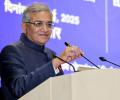
Opposition parties are planning a third attempt to move a motion for the removal of Chief Election Commissioner Gyanesh Kumar in both the Lok Sabha and Rajya Sabha. This renewed effort follows an Indian Express report highlighting objections from two other Election Commissioners regarding decisions made without their knowledge, particularly concerning voter registration and electoral roll management.
The Bombay High Court's Goa bench has ruled that draft electoral rolls cannot be the sole basis for deleting names from voter lists, asserting that administrative software cannot supersede statutory laws. The court questioned the Election Commission of India's authority to delete voters without a hearing, highlighting concerns over the ERONET system's limitations and its potential to disenfranchise citizens.

Former Indian Olympic Association (IOA) Secretary General Rajeev Mehta is expected to contest for the president's post in the upcoming December 5 elections. Mehta, who served as Secretary General from 2014 to 2022, is likely to file his nomination papers on Monday. Olympic medallist Gagan Narang is currently considered the frontrunner for the top position.

The UN human rights office expressed concern over mass detentions during protests in Delhi on Saturday, urging India to respect peaceful assembly rights and release detainees. India rejected these concerns as "misplaced" and "unwarranted interference." The protests, organised by the Gen Z-led Cockroach Janta Party (CJP), demanded electoral reforms and the resignation of CEC Gyanesh Kumar over alleged voter list manipulation, which the Election Commission and BJP deny.

National commissions have sought reports from the Jharkhand government regarding allegations of rape against Congress MLA Bhushan Bara involving a 14-year-old domestic help. The case has ignited a political slugfest between the BJP and Congress, with both parties trading barbs over the accusations and past incidents. An FIR has been registered under the POCSO Act, and investigations are underway.

Assam has published its draft electoral roll with 2.52 crore electors, an increase of 2.19 lakh voters since the last revision. The list includes detailed breakdowns by gender, age, and disability, with a period for claims and objections until December 11, and the final list due on January 4 next year. This revision is part of a unique Special Revision process for the state.

The BJP secured six of the 11 Uttar Pradesh Legislative Council seats, while the Samajwadi Party won three, with counting ongoing for the remaining constituencies. Key wins for BJP included Agra Graduates' and Meerut Teachers' and Graduates' seats, while SP claimed Allahabad-Jhansi Graduates' and Varanasi Teachers' constituencies. The elections were marked by allegations of voter manipulation and irregularities, particularly in the Gorakhpur-Faizabad Teachers' constituency, and SP president Akhilesh Yadav also raised concerns about the treatment of a winning candidate.

The Supreme Court has issued notices to the Election Commission and the Centre regarding pleas alleging that the poll body made several decisions without the approval of the two election commissioners. The court stated it would annul any decisions found not to be in accordance with the law, while also refusing an interim order to restrain CEC Gyanesh Kumar from making decisions.

Karnataka's final electoral roll, published on Tuesday, shows a significant reduction of nearly one crore voters following the Special Intensive Revision (SIR) process, bringing the total count to 4.55 crore from 5.54 crore.

The INDIA bloc leaders are scheduled to meet President Droupadi Murmu on Friday evening to press for the resignation of Chief Election Commissioner Gyanesh Kumar. This demand stems from alleged irregularities in the Special Intensive Revision of electoral rolls. The opposition has been protesting for three days, culminating in a sit-in at Rajghat on Thursday, alleging "vote chori" and a "hijacking" of the country. The Election Commission has defended its procedures amidst reports of internal dissent regarding SIR decisions.

Delhi Police has equipped frontline officers in the New Delhi area with body-worn cameras to enhance accountability and provide evidence during protests and crowd management. This initiative follows recent allegations of misconduct against police personnel, including sexual harassment, during demonstrations, and aims to ensure transparency in interactions between police and protesters.

Gujarat CID-Crime has registered FIRs against three political outfits Swatantrata Abhivyakti Party, Satyavadi Rakshak Party, and Garib Kalyan Party for allegedly orchestrating a 'poll donation scam' amounting to Rs 314 crore in tax evasion. These parties reportedly collected donations, returned money after deducting commissions, and facilitated tax rebates for donors, with chartered accountants also implicated. The scam involved submitting false contribution reports to the Election Commission.

The Election Commission of India has revised instructions for the Special Intensive Revision of voter rolls, allowing voters served notices for "No Mapping" or "Logical Discrepancy" categories to avoid physical appearance. Booth Level Officers will collect documents at residences, and submissions can also be made via WhatsApp or during special camps, ensuring a more accessible process for electors.

Olympic gold medallist Abhinav Bindra has called for greater transparency and fairness in the electoral processes of India's sports governance system, highlighting an inconsistency between the Indian Olympic Association (IOA) Constitution and the rules followed during recent Sportspersons of Merit (SOM) elections.

Tamilaga Vettri Kazhagam (TVK) has accused DMK president M.K. Stalin of 'body-shaming' their Dharapuram bypoll candidate P. Satyabama during a campaign rally, petitioning the Election Commission to revoke his star campaigner status and impose a temporary ban.

'If Gyanesh Kumar had some shame he would have resigned and would have taken agni pariksha.'
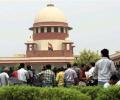
A curative petition has been filed in the Supreme Court challenging the September 23 split verdict on the Chief Election Commissioner and Other Election Commissioners (Appointment, Conditions of Service and Term of Office) Act, 2023. The petition, filed by Jaya Thakur, alleges a "reasonable apprehension of bias" due to claims that Justice Satish Chandra Sharma's son is a standing counsel for the Election Commission, raising questions about judicial propriety.

Counting of votes has commenced for Legislative Council seats across Maharashtra, Uttar Pradesh, Bihar, and Karnataka, with significant political implications ahead of upcoming electoral battles. The elections saw varied turnouts and intense contests between ruling alliances and opposition parties.

The Opposition India bloc has threatened to initiate impeachment proceedings against Chief Election Commissioner Gyanesh Kumar, citing alleged irregularities in the Special Intensive Revision (SIR) of electoral rolls. This move comes as the Opposition plans a joint agitation and highlights the constitutional process for removing a CEC, which mirrors that of a Supreme Court judge.

The INDIA bloc has formulated a joint action plan to address the Special Intensive Revision (SIR) row and concerns over Electronic Voting Machines (EVMs). Following a meeting of key opposition leaders, the alliance announced a series of "save democracy" marches, demonstrations, and a march to the Election Commission, demanding a return to ballot papers for elections and alleging electoral malpractices by the ruling government.

India's Election Commission's centralised voter database systems, ERONET and ECINet, are under scrutiny following concerns raised by Election Commissioners Sukhbir Singh Sandhu and Vivek Joshi regarding the centralisation of electoral rolls and control available to state election officials. The article explains how these systems work and why they are currently in the news.

AICC general secretary K C Venugopal announced that the INDIA bloc will stage a major protest in Delhi on Monday to protect voting rights, following meetings with the President and a planned meeting with the Chief Justice of India. He accused PM Modi and Amit Shah of attempting to protect Chief Election Commissioner Gyanesh Kumar and criticised the Centre for denying an AIIMS facility to Keralam despite past assurances. Venugopal affirmed the bloc's commitment to ensuring free and fair elections and expressed hope for AIIMS if they come to power.
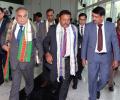
India's Sports Ministry has announced the formation of a 20-member National Sports Election Panel (NSEP), including two former Chief Election Commissioners, to oversee fair elections in national sports bodies. This panel, mandated by the National Sports Governance Act 2025, aims to streamline electoral processes. Additionally, the deadline for applications to the National Sports Tribunal (NST), which will handle sports disputes, has been extended.
